 GREECE · INOUT
Start with all ten outcomes
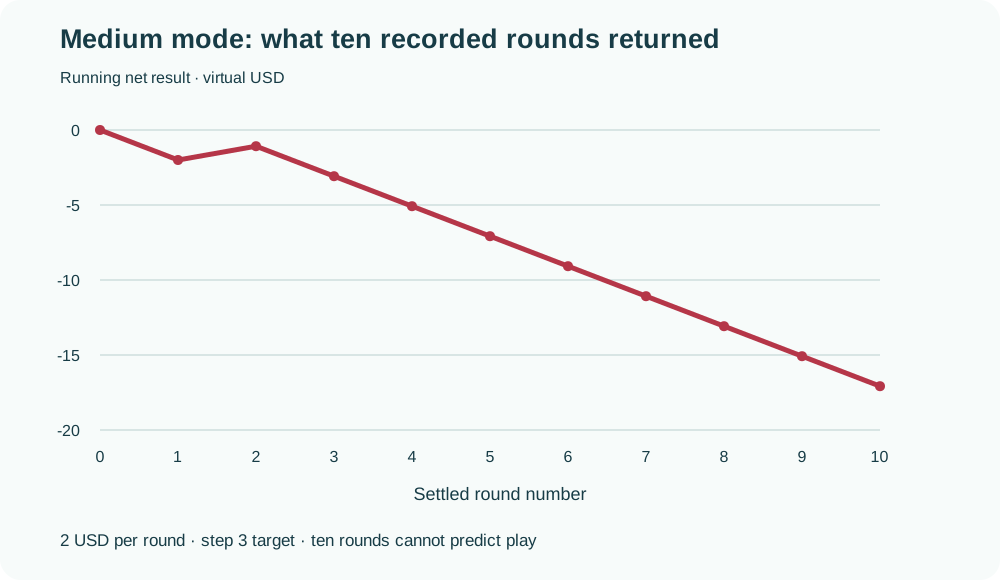
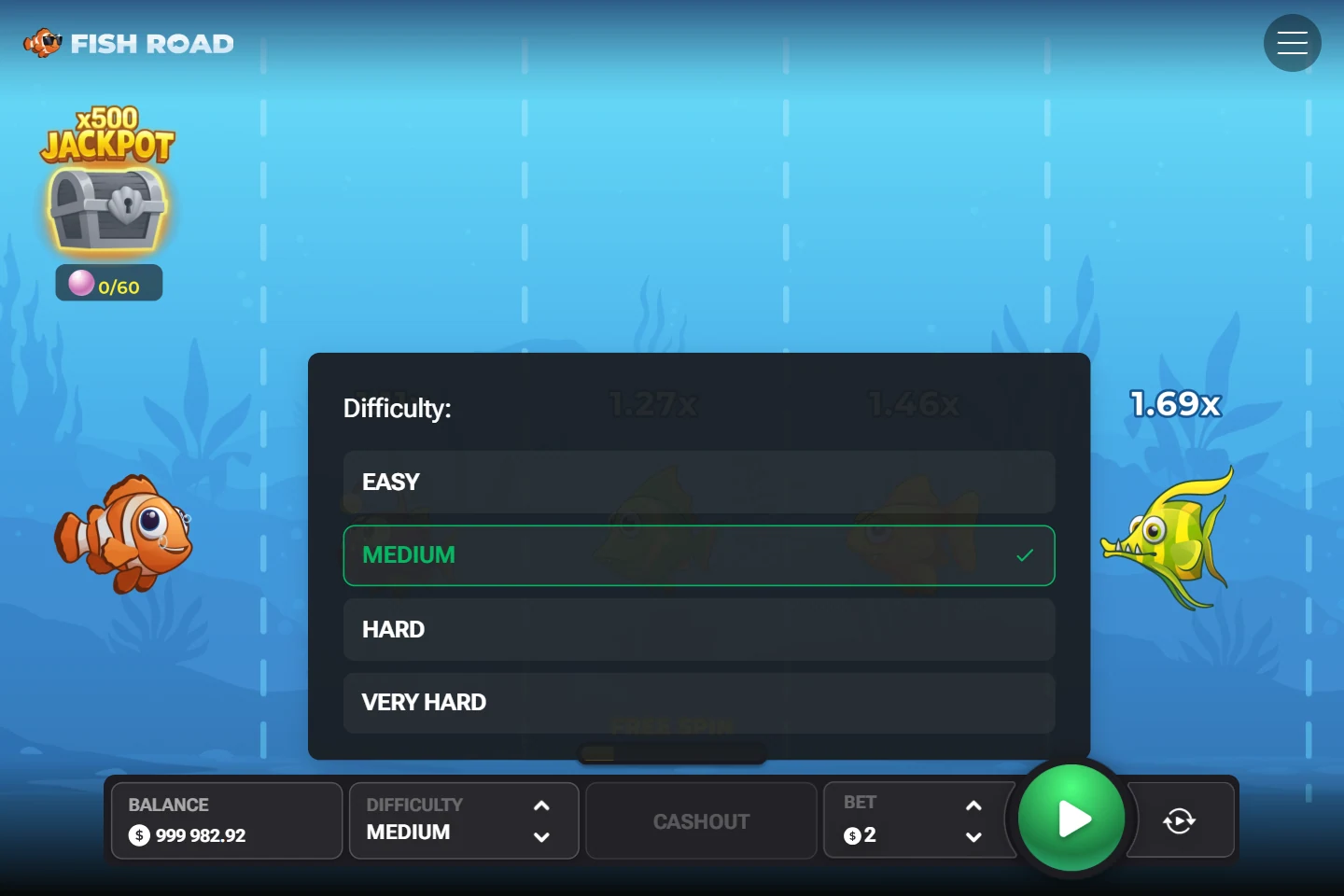
A strategy description is only reproducible if it states the difficulty, stake and exit. Ours used Medium, 2 virtual USD and a cashout after three successful steps. We stopped the observation at ten settled starts and kept every attempt, rather than recording until the balance finally improved.
The first attempt ended at the first position. The second reached the third successful position and returned 2.92 USD at 1.46×. Each of the remaining eight attempts ended before that exit. Across the sample there was one successful cashout and nine zero returns.
Swipe sideways to see every column.
| Round | Stake | Return | Net | Closing balance |
|---|---|---|---|---|
| 1 | 2.00 | 0.00 | -2.00 | 999,998.00 |
| 2 | 2.00 | 2.92 | +0.92 | 999,998.92 |
| 3 | 2.00 | 0.00 | -2.00 | 999,996.92 |
| 4 | 2.00 | 0.00 | -2.00 | 999,994.92 |
| 5 | 2.00 | 0.00 | -2.00 | 999,992.92 |
| 6 | 2.00 | 0.00 | -2.00 | 999,990.92 |
| 7 | 2.00 | 0.00 | -2.00 | 999,988.92 |
| 8 | 2.00 | 0.00 | -2.00 | 999,986.92 |
| 9 | 2.00 | 0.00 | -2.00 | 999,984.92 |
| 10 | 2.00 | 0.00 | -2.00 | 999,982.92 |
Get the complete ten-round CSV The ledger records what was staked and returned, with balances before and after each settlement. It excludes identifiers that would expose the research session. It is a virtual-credit observation, not an account statement for real-money play.
Total returns of 2.92 USD divided by total stakes of 20 USD give a 14.6% observed return. That startling short-sample figure must not replace the provider’s stated 96% theoretical RTP. A small, rule-specific sequence and a long-run game model answer different questions.
Our last screenshot still displayed LAST WIN 2.92 after the tenth round lost. The number referred to the second round. This is a useful reason to keep a ledger: a persistent win badge can make the final screen look more positive than the actual sequence.
Decision 1: what would the target need to break even?
For a simplified round that returns 1.46 times the stake on success and zero on failure, break-even requires a success probability of 1 ÷ 1.46. That is about 68.49%, before separate feature value or other adjustments.
This number is a required threshold, not the probability measured by our test. One win out of ten gives an observed frequency of 10% in this sequence. Ten trials are not enough to confidently assign the true long-run frequency of a target, particularly without a full model of the game.

For ten equal 2 USD stakes, seven successful cashouts at 2.92 USD would return 20.44 USD, or +0.44 USD net. Six would return 17.52 USD, or −2.48 USD net. Both examples use the same 1.46× target. The result depends on how often it is reached.
It follows that “cash out below 1.5×” is not, by itself, a complete low-risk strategy. You must still know the chance of arriving at the cashout offer. A small profit per win can require a high hit rate to offset a full lost stake.
Our observation supports a narrower conclusion: this particular ten-round attempt was unprofitable. It does not prove that the next ten will repeat it, that a higher target is better or that a different difficulty will repair a previous loss.
The decision calculator handles a related but different question inside a surviving round: what success probability would make another step equal to collecting now? Do not confuse that conditional threshold with the probability of surviving the whole path from a fresh start.
Distinguish two questions about 1.46×
Before a new bet, the simplified threshold for reaching and collecting 1.46× is 68.49%. After surviving to 1.27×, the comparison is different. 1.27 divided by 1.46 gives about 86.99% for equality between collecting now and attempting just one additional step.
Neither percentage is a probability learned from this sample. They are prices expressed as required probabilities under stated assumptions. Combining them into a claim that a target is “almost certain” would reverse the calculation and invent missing information.
Decision 2: size the stake without rewriting the outcome
A fixed stake separates the path result from a money-management rule. Here each failed attempt cost 2 USD. The one success added 0.92 USD net. The arithmetic can be audited without guessing which losses led to larger wagers.
In a hypothetical replay with the same multipliers and half the stakes, every monetary result would also be halved. That does not establish the same feature progress or confirm an alternative stake as an actual played session. A replay needs those assumptions stated explicitly.
Our 1,000,000-credit opening wallet did not make the target better. It merely made ten losses affordable in a demonstration. A personal session limit should not be chosen by copying that virtual balance or by treating a tiny percentage of it as normal spending.
Suppose an illustrative budget is 30 EUR and the stake is 2 EUR. Fifteen complete lost stakes would exhaust it if no returns arrived. That is a budget division, not a prediction and not confirmation that the inspected USD session accepted euros.
If the available amount is below the intended stake, the next round cannot be funded without changing the plan. Increasing the budget after a loss is a new spending decision. It should not be hidden inside a strategy result as though the original capital were unchanged.
Percentage staking also needs an exact definition: percentage of the original budget or the current balance, minimum permitted stake and rounding. These choices can change the sequence of amounts. None supplies knowledge of the next successful step.
Decisions 3 and 4: recovery bets and restart rules
Doubling after a loss does not automatically recover it at 1.46×. Lose 2 USD, then win with a 4 USD stake: the second round earns 1.84 USD net, leaving the combined result at −0.16 USD. The familiar slogan assumes a different payout relationship.
After one 2 USD loss, the next successful stake would need to be about 4.35 USD just to cover that loss at a 0.46 net gain per unit staked, before rounding. To recover it and also make the original 0.92 USD target, the stake would need to be about 6.35 USD.
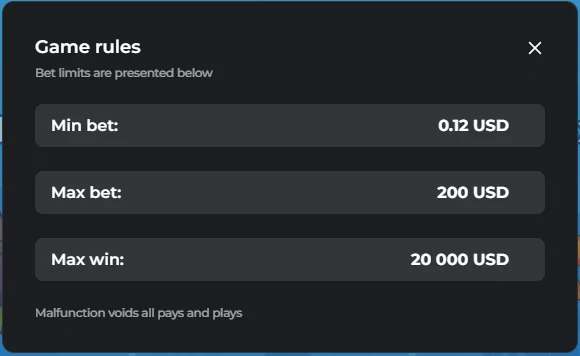
Another loss increases the required amount further. A finite balance and a 200 USD maximum stake eventually matter, even if a spreadsheet continues doubling without restriction. A fair replay stops when its own funding or cap rule prevents another bet.

A stop-loss is a rule for ending exposure. It does not revise earlier outcomes. If you stop at a 6 USD loss and restart immediately with another 6 USD limit, the combined activity can still lose 12 USD. Separate segment totals are useful only if the overall total remains visible.
Specify what triggers the stop: net loss, total stakes, time or a number of completed rounds. They are not interchangeable. Ten 2 USD starts mean 20 USD turnover here, while the net loss was 17.08 USD because one round returned 2.92 USD.
Think about overshoot as well. If net is −5 USD and the next stake is 2 USD, a loss ends at −7 USD. A nominal −6 USD threshold does not prevent that last step beyond the limit. The permission to place a new stake must be part of the plan.
A pause may help you reconsider the budget. We have not established that waiting a number of seconds, changing a seed or playing at a particular clock minute improves the result distribution. Keep personal stop rules separate from claims about game probabilities.
Decision 5: count features only when they pay
The visible pearl and free-spin meters invite a different kind of chase. In this recording no pearl was collected and no feature paid. There is therefore no bonus amount to add to the ordinary returns. A hypothetical future jackpot cannot turn the recorded loss into a measured profit.
The game associates progress with stake, currency and difficulty. Before changing a setting, note which meter is currently shown. A higher stake can put you in another bucket; it is not safe to assume that every existing point of progress follows the change.
Separate three states in your notes: progress displayed, feature triggered and feature settled. They are not synonyms. Only the last can contribute a measured amount to a return table, and only after you know what was actually paid.
The amount already spent building a meter is a past cost. Whether continuing is worthwhile would require information about the remaining cost and possible returns. Our ten starts do not estimate either. The bar’s visual closeness to the end is not a complete mathematical argument.
The same caution applies to the 30-day storage statement in help. It describes a rule we read, not an experiment we ran. A strategy based on returning weeks later would need its own test of the relevant account and saved state.
Record a completed feature only once. If its amount is already included in a round’s total return, adding it again as a separate bonus double-counts the same money. Our record contains no completed feature, so its ten returns need no such allocation.
A better next test has a rule before it has a result
Choose the target, stake, difficulty and sample size before starting. Record every paid attempt, including a first-step loss. Mark interruptions instead of converting an uncertain state into a convenient result. End at the planned boundary rather than extending only until a profitable screenshot appears.
For a target comparison, collect a new complete sample or define a replay that uses only information actually available in the captured sequence. We cashed out the successful round at step three. Its unplayed continuation is not a real higher-step return in this dataset.
Report total staked, total returned, net, number of target hits and the largest decline from a previous balance peak. A final result alone hides the route taken. A line that begins after an early loss or restarts at zero after every stop hides it too.
Use the recorded ten rounds to learn what a full entry looks like, not to select a universal winner. The rule here did not make money. The next useful question is whether a preselected alternative behaves differently on new data, with the same honest accounting.
Until then, the practical improvement is understanding the offer you are considering. You can inspect the game controls, try the virtual-credit demo and calculate a hypothetical continuation threshold without pretending to predict the next step.
Make the observation useful to someone else
Keep the original screen alongside the numerical row. A close crop can explain the button but may hide the currency or difficulty. Record a setting change at the time it happens, rather than letting a later reader assume that every row used the first screenshot’s configuration.
Check the money total in two ways: returns minus stakes, and final wallet minus initial wallet. They agree only if there was no reset, top-up or other transaction between the endpoints. If they differ, investigate the bookkeeping before drawing a strategy conclusion.
Do not confuse an ordinary loss with missing data. Our nine zero returns have settled outcomes and belong in the denominator. An unresolved connection interruption would need its own status. Keeping those categories distinct prevents both exaggerated hit rates and invented losses.
A small honest record can answer a control question well even when it cannot select a winning system. The one 2.92 USD cashout explains the button; the nine losses show why the button’s attractive amount must be interpreted alongside failures to reach it.
Questions players ask
Which Fish Road rule did you actually play?
Medium, 2 virtual USD per paid start and cashout after three successful steps at 1.46×. Ten completed attempts returned 2.92 USD in total.
Can the losing sample identify a profitable predictor?
No. It records past settlements and does not expose a verified future-step signal. Choosing a rule after seeing the rows would also require a new independent test.
Does doubling recover a loss at 1.46×?
Not automatically. After losing 2 USD, a successful 4 USD stake earns 1.84 USD net and leaves the combined result at −0.16 USD.